On September 10th, Superintendent Chris Reykdal stood at the Old Capitol Building in Olympia and told Washington parents a story that sounded too good to be true. According to him, student test scores have seen a “remarkable” recovery since the pandemic.
Here’s the problem: the numbers don’t match reality.
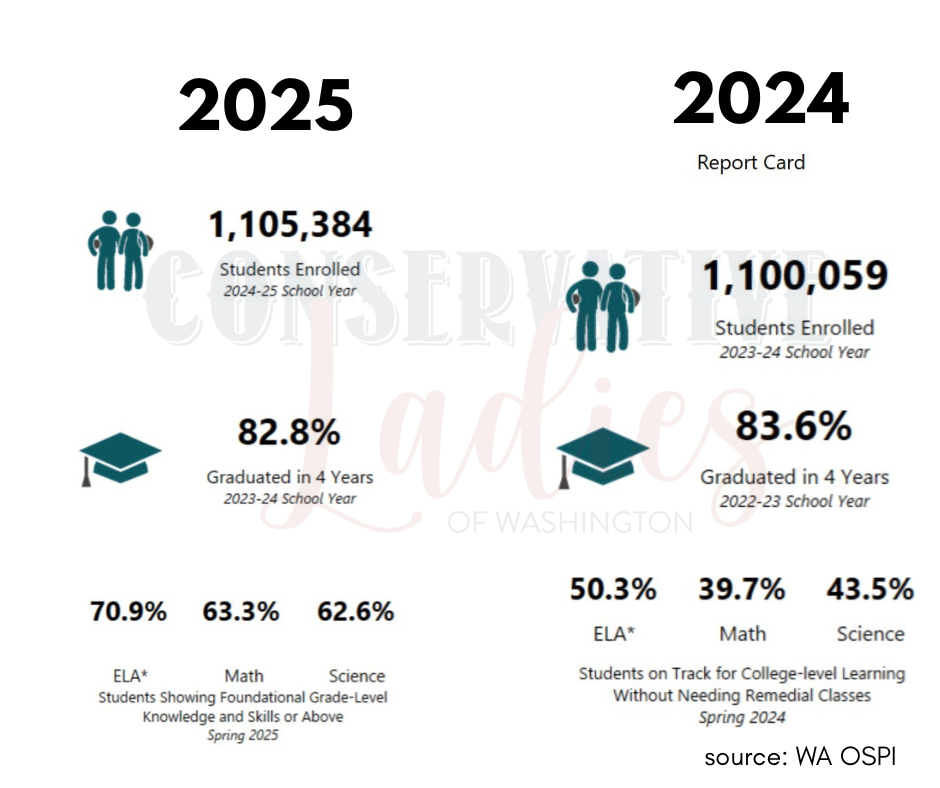
In 2024, OSPI’s own Report Card showed just 50.9% of students meeting grade-level standards in reading and 40.7% in math. A year later, Reykdal claimed 71% in reading and 63% in math. That’s a jump of more than 20 points in just twelve months. Sounds amazing, right? Almost too amazing.
That’s because it is.
What Really Changed? The Definition of “Proficiency”
Reykdal didn’t magically turn failing schools around. He changed the definition of what it means to be “proficient.”
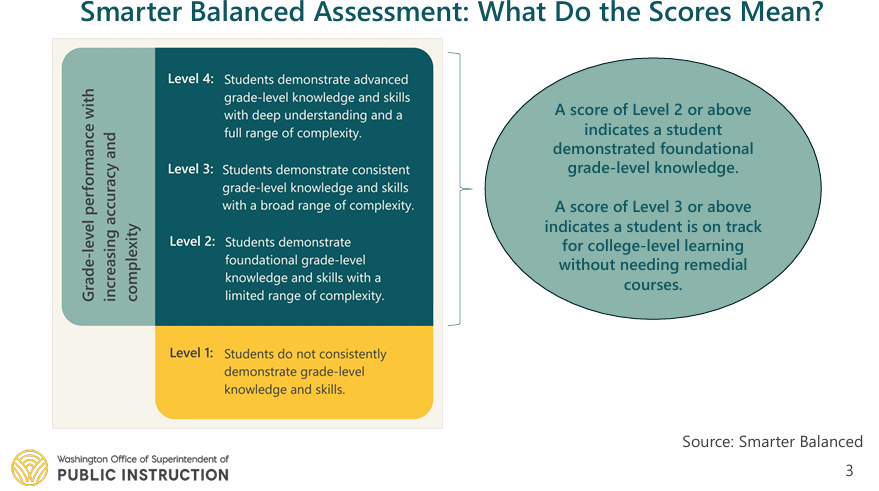
- In 2024, only students scoring Levels 3–4 were considered meeting standards—consistent to advanced knowledge.
- In 2025, Reykdal broadened the definition to include Level 2—students with only “basic” or “inconsistent” skills.
That’s how he got from 50.9% to 71% in reading. The scores didn’t leap forward. The bar was lowered.
You can see this spelled out in the 2025 press release (Slide 3), which says Levels 2–4 now represent “grade-level proficiency.” Reykdal even defended it in the press conference transcript, where he dismissed criticism by saying even Level 2 students can succeed in college.
Parents, think about what that means: kids who aren’t really reading or doing math at grade level are now being counted as “proficient.”
Calling Parents “Misinformation Spreaders”
One of the most telling moments in Reykdal’s press conference came at about the five-minute mark of the transcript (00:05:23). Instead of honestly engaging with concerns, he accused his critics of spreading “deliberate misrepresentation” and “misinformation.”
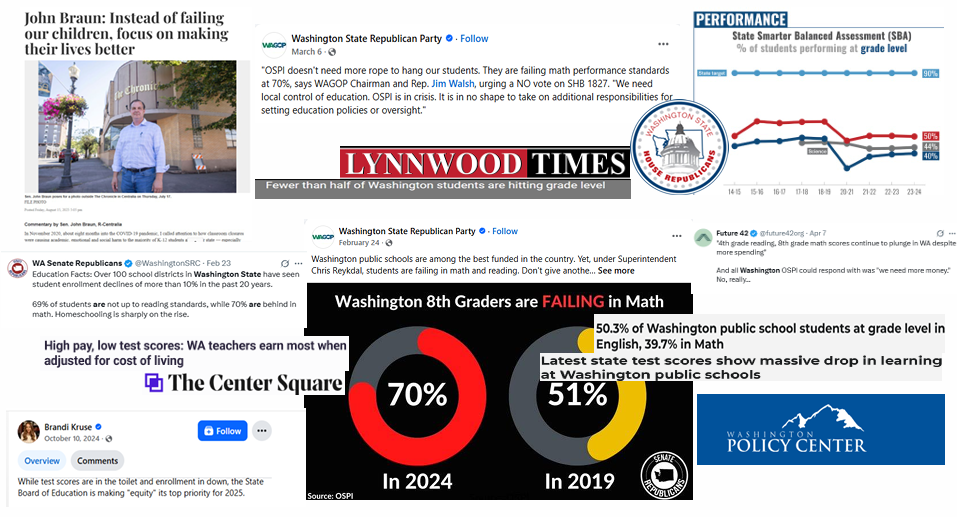
“There are think tanks and organizations that misuse this data to attack public education… They care about kids, but they’re using bad data to create a narrative that’s divisive.”
And who are those critics? Parents. Advocates. Conservatives. People like you and me who are pointing out that including barely-scraping-by Level 2 students in the “proficient” category is dishonest.
“Get the actual information and let’s work together to solve these problems rather than creating a narrative that’s not based in fact.”
This is the classic political move we’ve seen again and again: silence the opposition by smearing them as liars. Reykdal wants you to believe that if you question his numbers, you’re the problem. Not the schools. Not the broken system. Not the bureaucrats lowering standards.
But parents live this reality every single day. We see the homework. We know when our kids are behind. No amount of spin or name-calling can change that.
Why Lower the Bar?
Reykdal would like you to believe this is about “post-pandemic recovery” and “equity.” He pointed to “12 of 14 metrics improving” and even leaned on global PISA scores to shrug, “See, everyone’s struggling.”
But let’s be honest: this is political spin. Washington’s schools are failing. Parents are frustrated. So instead of fixing the problem, he simply moved the goalposts. And when the legislature throws a few million at supplies, that doesn’t magically lift proficiency by 20 points in a year. Only a rebrand can do that.
And that brings us to the real story — because when we step outside Reykdal’s marketing and look at Washington’s NAEP scores, the truth comes out.
Reykdal didn’t stop at spin. At the September 10th press conference in Olympia, he announced a $10 million proposal to target math instruction for students in kindergarten through 8th grade. According to Reykdal, the funding would support applied programs like welding, construction, and other real-world math applications, part of what he calls “jumping into this work in Washington.” (OSPI Press Release, 9/10/25)
On paper, it sounds proactive. But remember: OSPI is simultaneously claiming a 20-point leap in proficiency based on foundational Level 2 students, not real skill mastery. Even with a $10 million targeted investment, that’s not enough to justify the enormous “miracle” improvement” Reykdal is touting. Parents deserve to know that the numbers are inflated before any of this new funding even reaches classrooms.
The National Report Card Tells a Different Story
Just one day before Reykdal’s press conference, on September 9th, 2025, the National Assessment of Educational Progress (NAEP) released its latest results—the so-called “Nation’s Report Card.” And unlike OSPI’s glossy press release, the NAEP data is brutal.
- Math: 12th grade scores dropped 3 points compared to both 2019 and 2005. Fewer students reached NAEP Proficient, and more fell below NAEP Basic—the lowest possible achievement level. The gap between top performers and struggling students is widening.
- Reading: 12th grade reading scores hit their lowest point since NAEP began in 1992. That’s a 10-point decline since 1992, and a 3-point drop just since 2019. Students today are less able to comprehend complex texts, infer meaning, and evaluate arguments.
- Science: Among 8th graders, scores dropped 4 points across all three science areas. Even worse, 38% of students scored below Basic, and more students reported feeling less confident in their knowledge.
This is not “remarkable recovery.” This is a national emergency.
The same week Reykdal claimed Washington students are thriving, the Nation’s Report Card showed the opposite: our kids are falling further behind, not catching up.
Washington’s Reality vs. National Crisis
While Reykdal claims a huge surge in WA student performance under his redefined metric, the NAEP data from WA shows something far less glowing. In 8th-grade math, only 30% of Washington’s students are Proficient or Advanced. Even fewer are above the Basic level in many subgroups. OSPI
In 4th-grade reading, about 32% reach Proficient, and just 61% reach Basic. These numbers are flat, not surging. OSPI
Nationally, the picture is worse. Only 22% of high school seniors are Proficient in math, and 35% in reading, with declining scores especially among lower percentiles. These aren’t “recovery” numbers—they are warning signs. Business Insider+1
Spin vs. Reality
What OSPI is doing is clear. Instead of facing these results head-on, they moved the goalposts—counting barely proficient Level 2 students as “grade level” to paper over Washington’s decline.
While NAEP warns that students are losing foundational skills in math, reading, and science, Reykdal stands at a podium and says everything’s fine. While the nation’s top education benchmark shows the sharpest decline in reading since 1992, OSPI tells parents to celebrate.
This isn’t just dishonest, it’s dangerous. Because when leaders lie about the problem, they guarantee our kids won’t get the help they desperately need.
Support Our Work
At Conservative Ladies of America, we fight for transparency in education and the rights of parents. Your contribution helps us hold officials accountable and ensure every child gets the education they deserve. Donate today and stand with us.